Exerts From Lions Roar – The Dalai Lama – Special Edition
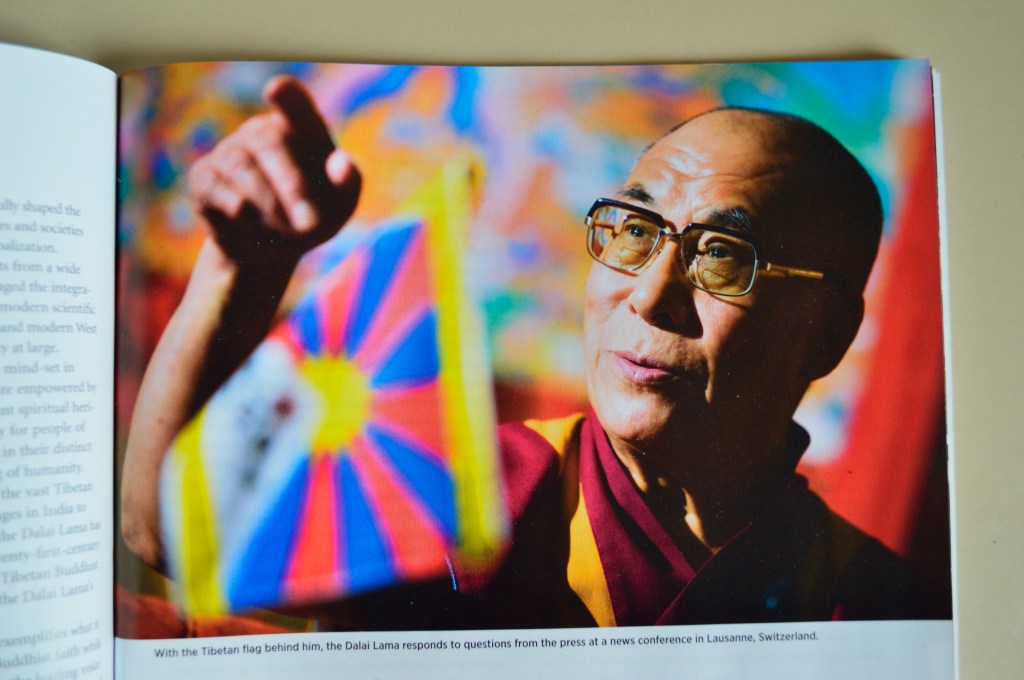
The Dalai has encountered genocidal oppression since being forced out of Tibet, his peaceful resistance has provided the world with a model of what a compassionate leader is. Dispite all opposition on a monumental scale, the Dalai Lama has continued to provide for his people and inspire Buddhists and non-Buddhists everywhere. His approach to the western world and the world of Science is progressive for the faith and his exchanges with scientists are enlightening for a vast number of modern people.
“Even as a young boy he loved to study mechanical objects: watches, toy airplanes, a film projector. He would take apart and put them together again to see how they worked. He had a Meccano set built cranes and railroads cars.”
“It was an occasion of happiness, when the motor that generated electric light at the Noerbulingka would break. It meant he had an excuse to take it apart and learn about internal combustion engines.”
The Buddhist understanding of reality and what action to take within reality is something that is not oppositional but different from the scientific external perspective. The focus on the internal reveals what Buddhists call bodhicitta, through all suffering, the buddhanature, the unifying, loving kindness at the root of all beings. Cultivating bodhicitta is the practice of compassion, which allows us to better understand one another, alleviating fear and constraints of mind that oppress and torment people. The studying of the mind, without humanity, without compassion is perceived to be aggression, both physically and mentally, humans are all learning of this in modernity. The study of the mind is the Buddhists realm of understanding, with thousands of years of teachings. The intellectual knowledge and material advancement of science is the distinguishing characteristic of the era. He may be the last Llama, his understanding of reality is a gift to humanity, one of earths greatest teachers.
“He taught me by studying with me, making me rethink and explain in Tibetan all sorts of things, from Jeffersonian democracy to Freudian psychology and physics to history. He downloaded the little bit I had gleaned from my western education, perhaps a bit disappointed I hadn’t been a science major! Its a wonderful time. I became a Buddhist monk and I learned a great deal from him.” – Robert Thurman
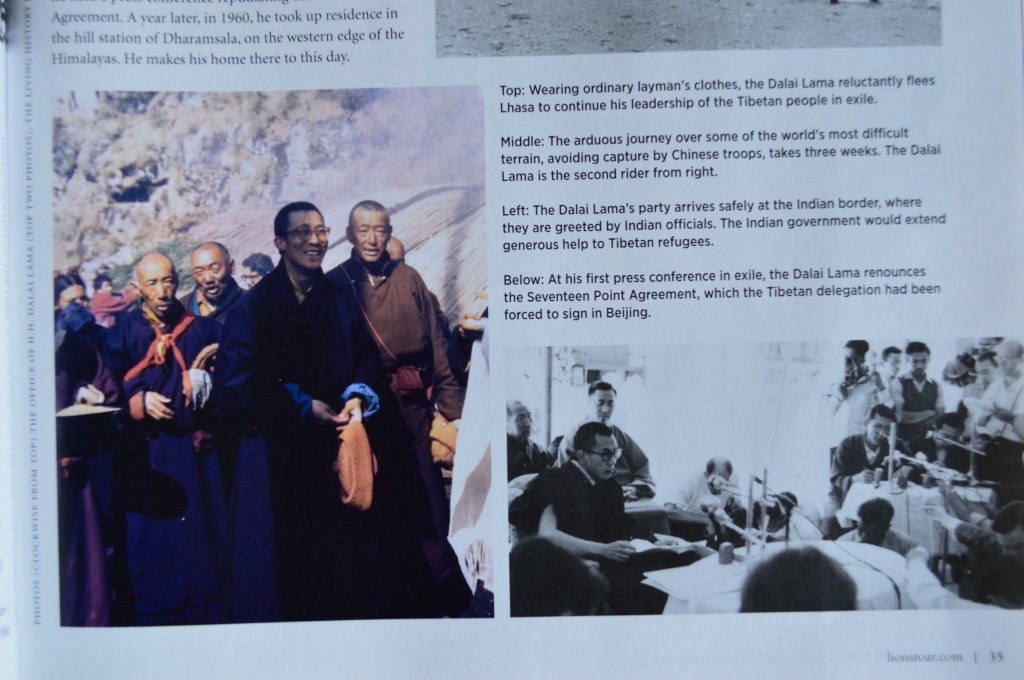
In 1954 he traveled to Beijing for peace talks, where he met with Mao Ze Dong, and other Chinese leaders. The journey lasted 11 months. The Chinese escorted him on tours around China to impress him with their successes. At one point Mao took him aside and said, “But of course religion is poison.” – Mao ze Dong
Religion as the conveyor of universal Truth is opposed and supported in modernity as it has always been. The foundation of scientific understanding of the external world can not be ignored. The scientific momentum in relation to object creation, turning nature into objects, is the momentum of capitalism. Even purely religious (faith) based business operations are using the scientific advancements of materials and logic (e.g. the computer and the cell phone). The truth of the eco-object crisis is an earthly reality. The waste produced from the human built environment, the plastics that remain in the ecosystem remain longer than the product. The car, is what it is, transportation that burns fuel (limited resource) and creates pollution, that is an unarguable truth of earthly living. The ontological truths of reality, Universal Truths, involve the internal and the external. The ultimate realities of matter, perception and feeling, mental factors (formations), and consciousness.
The cosmos, earth and the cosmic structure of the universe, regardless of how its approached, there is a way things are.
“Empty landscapes produce ghost stories. And faith” In reference to Tibet and Lhasa
Like wise an automobile assembly line is produces cars. The object world and the natural environment have an effect on the human minds perception of reality. Perceiving things incorrectly, can lead to disease of mind, body and environment.
“I concentrated hard on developing compassion for all sentient beings,” He wrote in Freedom In Exile “I reminded myself constantly of the Buddha’s teaching, that our enemy is in a sense our greatest teacher. And if this was sometimes hard to do, I never really doubted that it was so.” He was twenty three.
“When one compares the welfare of oneself with that of the numberless others, one finds that the welfare of others is far more important; and there fore giving up the benefits accruing to a single person for the sake of numberless other is a just and a righteous act. On the contrary, sacrificing the well being of many for the benefit of one ins not only most unfair act but also a foolish one”
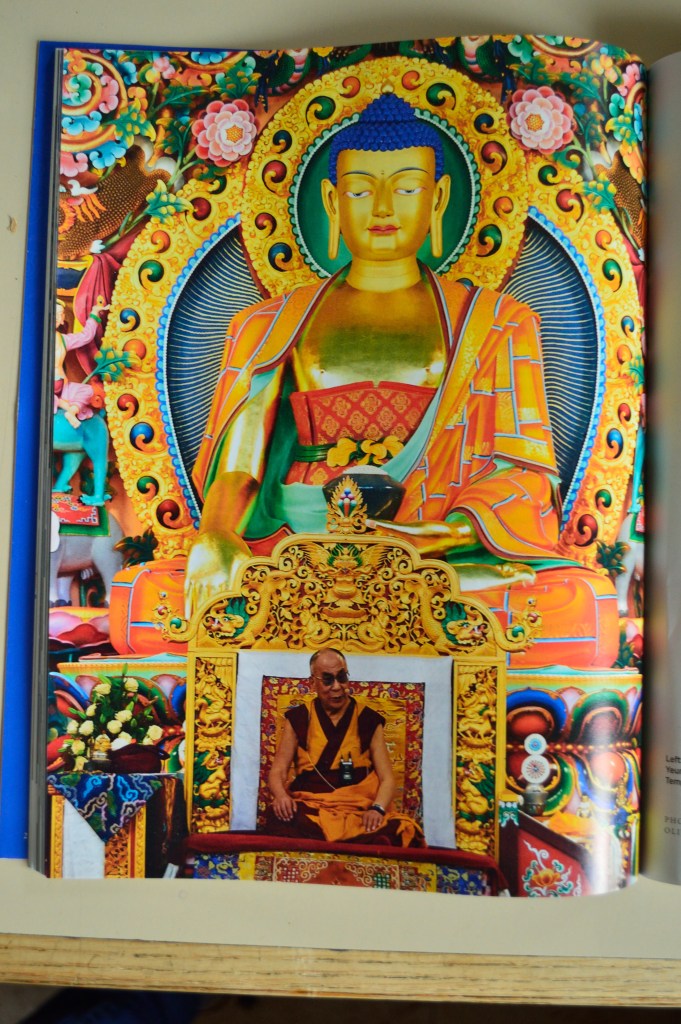
“Whether teaching his monastics or lay students, meeting with secular scientists and philosophers, or lecturing on broad themes to mass audiences, he has never failed to deliver, even in the briefest talk, some new perspective, some special insight, something one had not thought of before. He never stops expanding his wealth of intelligence.”Finally and I would remiss not to say perhaps his greatest Dharma teaching to a world caught up in violence is his personal example of living the teachings of the Buddha. For sixty-five years, he has responded to the genocidal oppression of his people with a call for nonviolence and reconciliation. He resolutely states the powers that be, that they must lay aside their arms and resolve their conflicts with dialogue. this stands for me as the greatest of his teachings.”
 The I_Nonself Journal - Journey > Siddhis Sadalmelik